
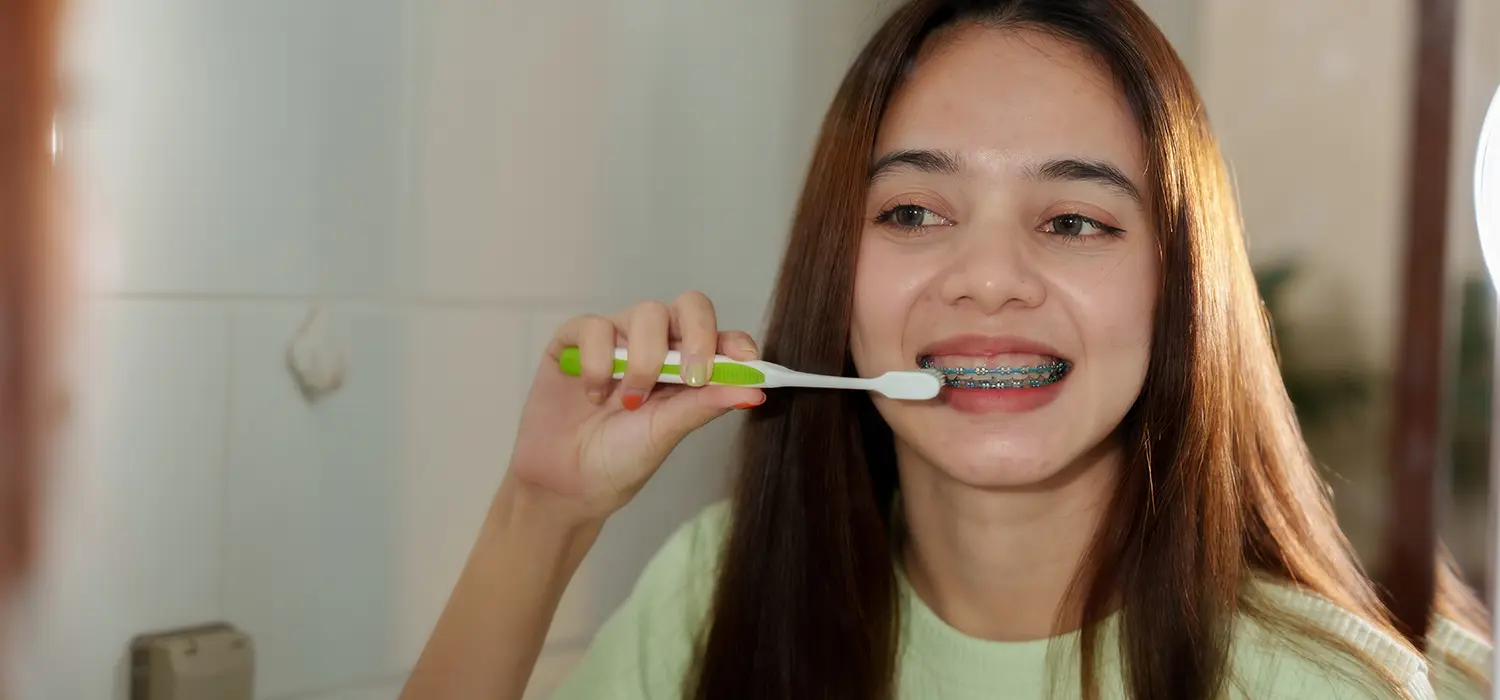
How To Improve Brushing and Flossing With Braces
Reviewed by: Dr. Paul Rubin, DDS
Braces make teeth harder to clean. Food particles and plaque collect around brackets and wires, increasing the risk of cavities, gum inflammation, and permanent staining. Improving daily brushing and flossing habits helps protect teeth throughout orthodontic treatment.
We care for growing smiles in Frisco, McKinney, and Prosper, TX with gentle, kid-focused dental care.
6 Tips To Help You Clean Your Teeth With Braces
The most effective way to protect teeth with braces is to adjust both your tools and your technique. These five tips address the most common hygiene gaps during orthodontic care.
1. Relax Your Lips to See the Gumline Clearly
Tightening the lips can limit visibility and make it harder to brush along the gumline. Keeping the lips relaxed allows better access to this area, helping remove plaque and reduce the risk of gum inflammation and decay.
2. Brush After Every Meal Using the Correct Angle
Use a soft-bristled toothbrush and fluoride toothpaste. Hold the brush at a 45-degree angle toward the gumline to clean above the brackets, then angle downward to clean beneath the wires. Brush each tooth individually, including chewing surfaces and the backs of teeth. Brushing should take at least two full minutes.
3. Add Interdental Cleaning Tools
Standard toothbrush bristles cannot reach every area around orthodontic hardware.
Helpful tools include:
- Interdental brushes
- Floss threaders
- Orthodontic floss
- Water flosser
These devices clean between brackets and under archwires where plaque commonly accumulates.
4. Floss Every Night Without Skipping
Flossing remains necessary during orthodontic treatment. Use a floss threader to guide floss under the wire before cleaning between each tooth.
A water flosser can assist with debris removal, but they should not replace mechanical flossing unless specifically recommended by your dentist.
5. Reduce Sugary and Sticky Foods
Sticky candy, caramel, soda, and sports drinks increase plaque retention around brackets. Limiting these foods lowers the risk of enamel damage and gum inflammation during treatment.
6. Inspect Teeth After Brushing
After brushing, inspect teeth closely in good lighting. Plaque often accumulates around bracket edges and near the gumline. Disclosing tablets can help identify missed areas. This step improves technique and reduces long-term enamel damage.
Why Oral Hygiene Is Extra Important During Orthodontic Treatment
Braces change the way teeth collect plaque. Brackets, wires, and bands create small spaces where food particles and bacteria can accumulate. These areas are harder to clean and require more precise brushing and flossing.
When plaque remains around brackets, it increases the risk of enamel decalcification. This can lead to white spot lesions that become visible after braces are removed. Gum inflammation and cavities are also more common when daily hygiene is inconsistent.
Consistent home care combined with regular dental exams and professional cleanings helps:
- Remove plaque buildup around brackets and along the gumline
- Monitor enamel for early signs of decalcification
- Reduce gum inflammation before it progresses
- Support healthy tooth movement during orthodontic treatment
Careful daily cleaning directly affects how teeth look and feel once braces come off.
Pediatric Dentist in Frisco, TX
At Lonestar Kid’s Dentistry, we provide exams, professional cleanings, and clear brushing guidance during orthodontic treatment.
To book an appointment at our pediatric dental office in Frisco, call (214) 618-5200 or visit us at 6801 Warren Parkway, Ste 115, Frisco, TX.
📍Other locations
Lonestar Kid’s Dentistry in McKinney, TX
Lonestar Kid’s Dentistry in Prosper, TX
FAQs
Use a small-headed soft toothbrush and angle it carefully behind the last molars. These areas are harder to see and often missed. Take extra time to brush along the gumline and around any bands placed on back teeth.
Plaque builds up quickly around brackets and wires. This can lead to cavities, permanent white spots on the enamel, gum inflammation, and bad breath. In some cases, untreated problems may delay orthodontic treatment.
Ideally, you should brush after every meal and before bed. Brackets and wires trap food easily, so brushing at least three times a day helps reduce plaque buildup and lowers the risk of cavities and gum inflammation. However, that isn’t always possible, so brush at least twice a day.