
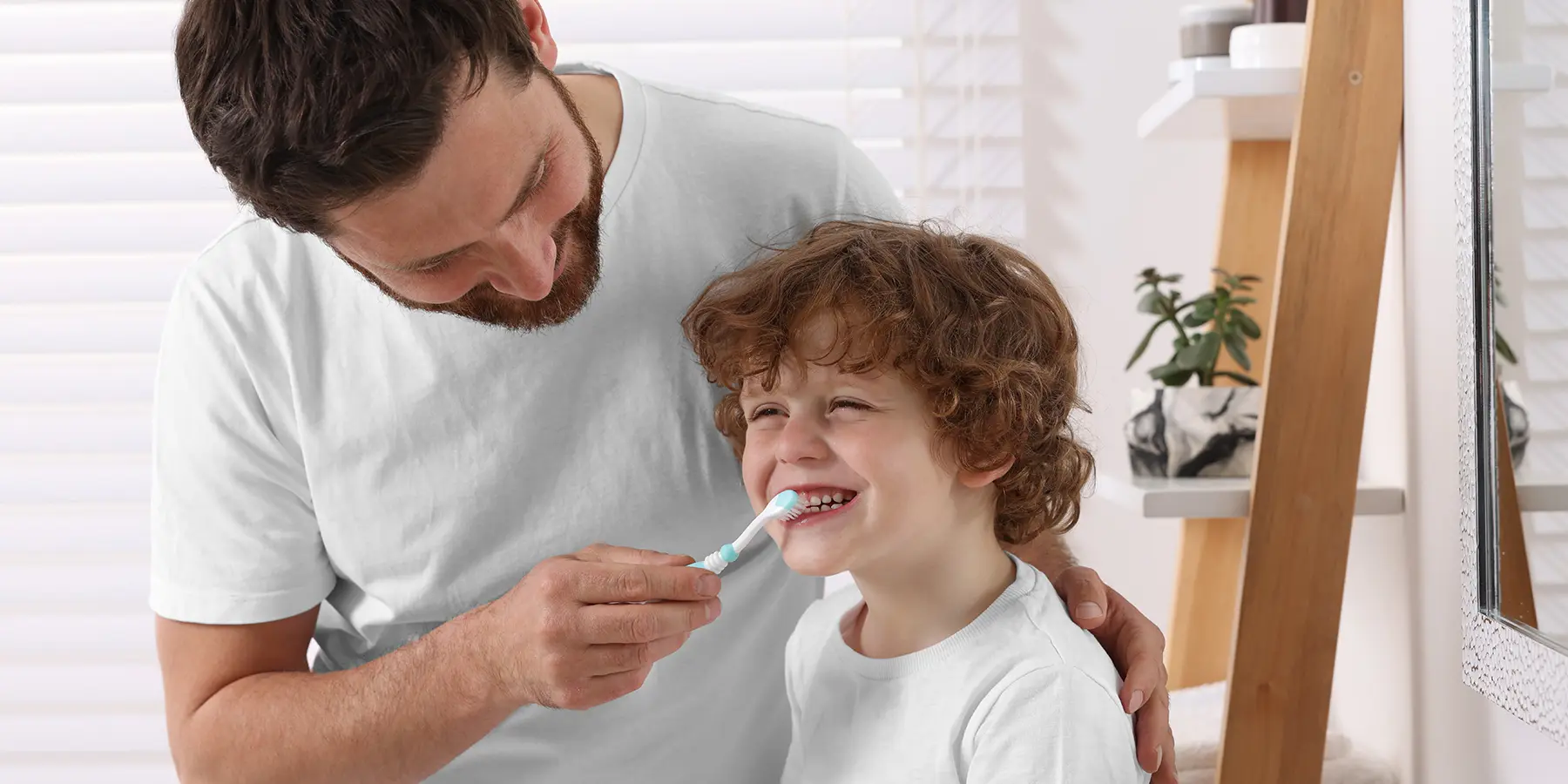
How to Get Kids to Brush Their Teeth Without Stress or Struggles
Reviewed by Dr. Paul Rubin
Getting kids to brush their teeth consistently is not always easy. When brushing feels like a battle, children are more likely to resist. Encouragement and positive reinforcement can help turn brushing into a routine your child is more willing to follow.
We care for growing smiles in Frisco, McKinney, and Prosper, TX with gentle, kid-focused dental care.
How Can I Motivate My Child to Brush Their Teeth Consistently?
Many children resist brushing when it feels forced or stressful. Brushing becomes easier when it is treated as a simple, positive routine instead of a daily battle. Encouragement, clear expectations, and positive reinforcement help children stick with brushing over time.
Motivation works best when children understand what is expected and feel supported rather than corrected.
Focus on Routine Before Perfection
Children do not need perfect brushing habits right away. What matters most is consistency. When brushing happens at the same times each day, it becomes part of the routine rather than something to argue about.
Keeping expectations simple helps reduce resistance. Two brushing sessions a day, a familiar spot in the bathroom, and a calm approach all make brushing feel more manageable for kids.
Use Encouragement That Is Clear and Specific
Encouragement works best when children know exactly what they did right. Vague praise can feel nice, but it does not always help children understand what to repeat.
Simple, specific comments work well, such as:
- “You brushed all the way to your back teeth.”
- “You took your time brushing tonight.”
- “You remembered to brush before bed without being asked.”
These small acknowledgments help children connect their effort with positive feedback.
Keep Rewards Simple and Short-Term
Rewards can help motivate brushing, especially when a child is building a new routine. They should be used as support, not as a requirement for brushing.
Helpful options include:
- Sticker charts for brushing twice a day
- Choosing a bedtime story after brushing
- Small non-food rewards after a full week of consistency
As brushing becomes routine, rewards can be phased out while encouragement continues.
Set a Calm Tone Around Brushing
Children often mirror the tone set by adults. When brushing feels rushed or tense, resistance tends to increase. A calm, steady approach helps brushing feel less stressful.
Offering simple choices can also help, such as:
- Letting your child choose the toothbrush color
- Allowing them to pick the brushing song
- Giving them a turn to brush before you help
These small choices give children a sense of control without changing expectations.
How Dental Visits Support Healthy Brushing Habits
Regular dental visits help reinforce brushing routines at home. During dental exams and cleanings, children learn why brushing is important and how it protects their teeth.
Positive experiences at the dentist also help children feel more comfortable talking about brushing, asking questions, and taking responsibility for their oral health as they grow.
Supporting Healthier Smiles Over Time
At Lonestar Kid’s Dentistry, we provide non judgmental dental care centered on education and long-term oral health. Our goal is to support families with clear guidance and preventive care that meets each child where they are.
To book an appointment at our pediatric dental office in McKinney, TX, call (214) 436-5555 or visit us at 5323 W University Dr #100, McKinney, Texas.
📍 Other locations
Lonestar Kid’s Dentistry in Frisco, TX
Lonestar Kid’s Dentistry in Prosper, TX
FAQ
You can begin as soon as the first tooth appears. Early routines help children become comfortable with daily brushing.
Brushing in the morning and before bed helps remove plaque and food buildup that can lead to cavities. Brushing at night is especially important because saliva flow slows during sleep, making teeth more vulnerable.
A soft-bristled toothbrush designed for your child’s age works well. For older children, electric toothbrushes with built-in timers can help encourage brushing for the full recommended time and make routines easier to follow.