
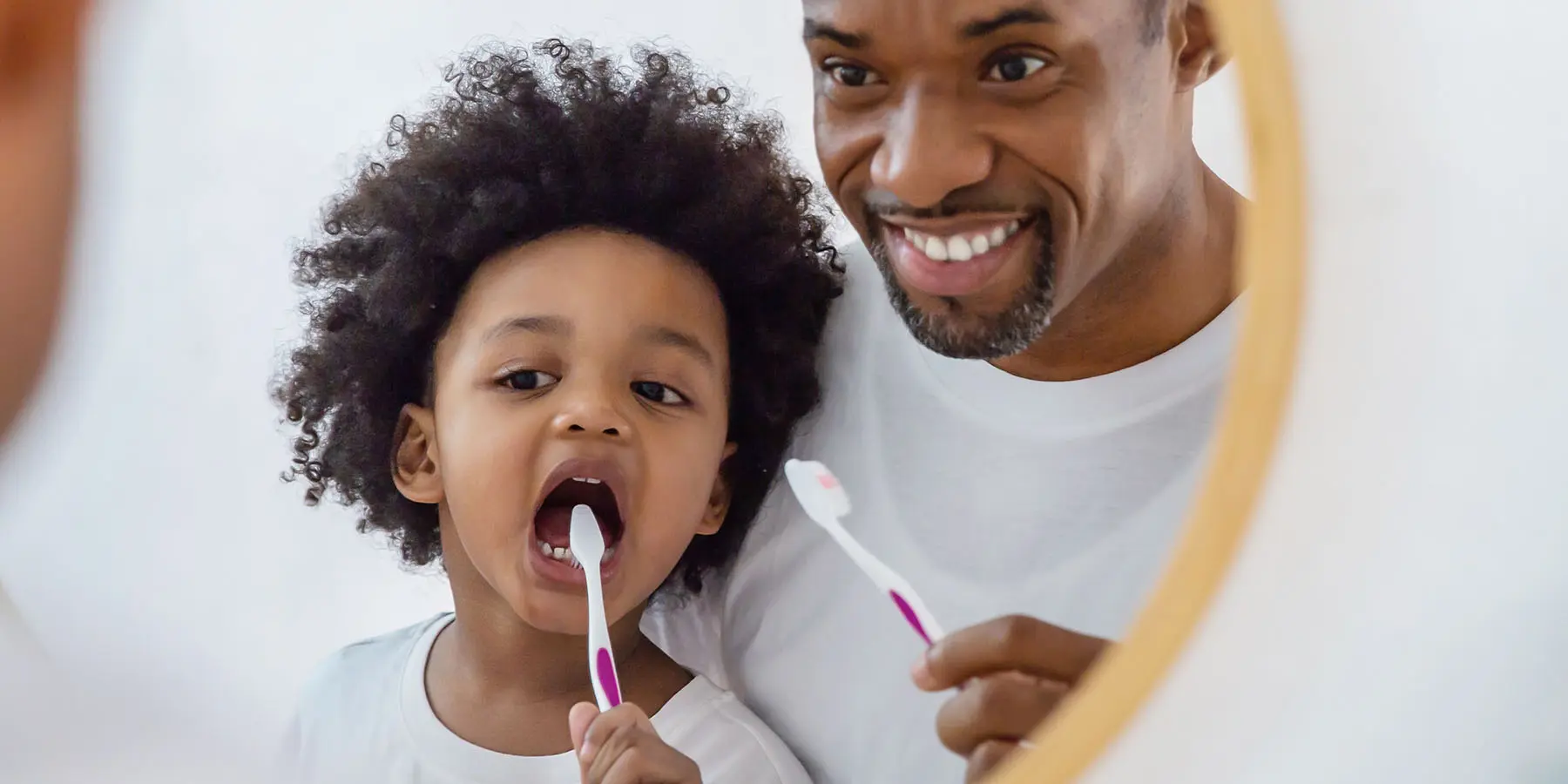
At What Age Can Kids Brush Their Own Teeth?
Reviewed by Dr. Paul Rubin
Reading time: 4 minutes
Many children can begin brushing their own teeth around ages 6 to 8, although some need help for longer. Age is only a guide. Your child also needs the coordination and attention to clean every tooth thoroughly before they are ready to brush without help.
We care for growing smiles in Frisco, McKinney, and Prosper, TX with gentle, kid-focused dental care.
When Can Kids Brush Without Help?
Young children usually do not have the fine motor skills needed to brush every surface of every tooth effectively. For many children, the necessary coordination develops around ages 6 to 8. Some children are ready sooner, while others benefit from a parent continuing to help beyond age 8.
This means there is no single age when parents need to stop helping. A child’s brushing skills and coordination are a better guide than age alone.
Signs Your Child Is Ready to Brush Independently
A simple way to judge brushing readiness is to look at other tasks that require fine motor coordination. If your child can independently button their buttons and zip their zippers, they may have developed coordination similar to what they need for effective tooth brushing.
Even then, watch them brush before handing over the job completely. Your child should be able to move the toothbrush around the entire mouth and consistently reach the front, back, and chewing surfaces of their teeth.
If they regularly miss areas or rush through brushing, they still need some supervision or hands-on help.
How to Transition to Independent Brushing
Children do not have to wait until they can brush perfectly to start practicing. Letting your child take a turn with the toothbrush helps them learn the routine while you make sure their teeth actually get clean.
One simple approach is to let your child brush first and then have a parent finish the job. As their skills improve, you can gradually do less while continuing to supervise. This transition gives children more responsibility without removing help before they are ready.
Good Brushing Habits Start With the First Tooth
Good brushing habits begin long before children can hold a toothbrush themselves. Once the first tooth appears, parents should brush it twice a day using a soft-bristled toothbrush and an age-appropriate amount of fluoride toothpaste.
For children younger than 3, use a smear or rice-sized amount of fluoride toothpaste. From ages 3 to 6, use a pea-sized amount and teach your child to spit out the toothpaste rather than swallow it.
Starting early helps protect baby teeth from cavities and makes twice-daily brushing a familiar part of your child’s routine.
Keep Checking Their Brushing Technique
When your child begins brushing independently, you do not have to stop paying attention to how they are doing. Continue checking their technique and reminding them to brush twice a day for about two minutes.
Pay particular attention to areas children commonly miss, including the back molars and along the gumline. Permanent molars also begin erupting around age 6, and their position at the back of the mouth can make them challenging for children to reach.
Plaque disclosing tablets can be a helpful way to check brushing at home. They temporarily stain plaque left behind on the teeth, making missed areas easier to see so your child knows where to spend more time brushing.
Regular pediatric dental exams and teeth cleanings also allow us to see how well your child is cleaning their teeth and identify areas where they may need more help at home.
Helping Kids Become Confident Brushers
Learning to brush independently is an important step, but children develop the necessary skills at different rates. If you are unsure whether your child is ready to brush without help, we can look at their oral hygiene and show you and your child where their brushing technique may need improvement.
To book an appointment at our pediatric dental office in McKinney, TX, call (214) 436-5555 or visit us at 5323 W University Dr #100, McKinney, Texas.
📍 Other locations
Lonestar Kid’s Dentistry in Frisco, TX
Lonestar Kid’s Dentistry in Prosper, TX
FAQs
Choose a soft-bristled toothbrush with a head small enough to comfortably reach around your child’s mouth. A handle that is easy for your child to grip can also make brushing easier as they begin practicing independently.
Both manual and electric toothbrushes can clean teeth effectively when used correctly. Some children find an electric toothbrush easier or more engaging to use, but they still need proper technique and parental supervision until they can brush thoroughly on their own.
Check your child’s teeth after brushing for food or plaque left between the teeth, along the gumline, or in the grooves of the back molars. Plaque disclosing tablets can also highlight areas that are being missed regularly and show where your child may need to improve their brushing.