
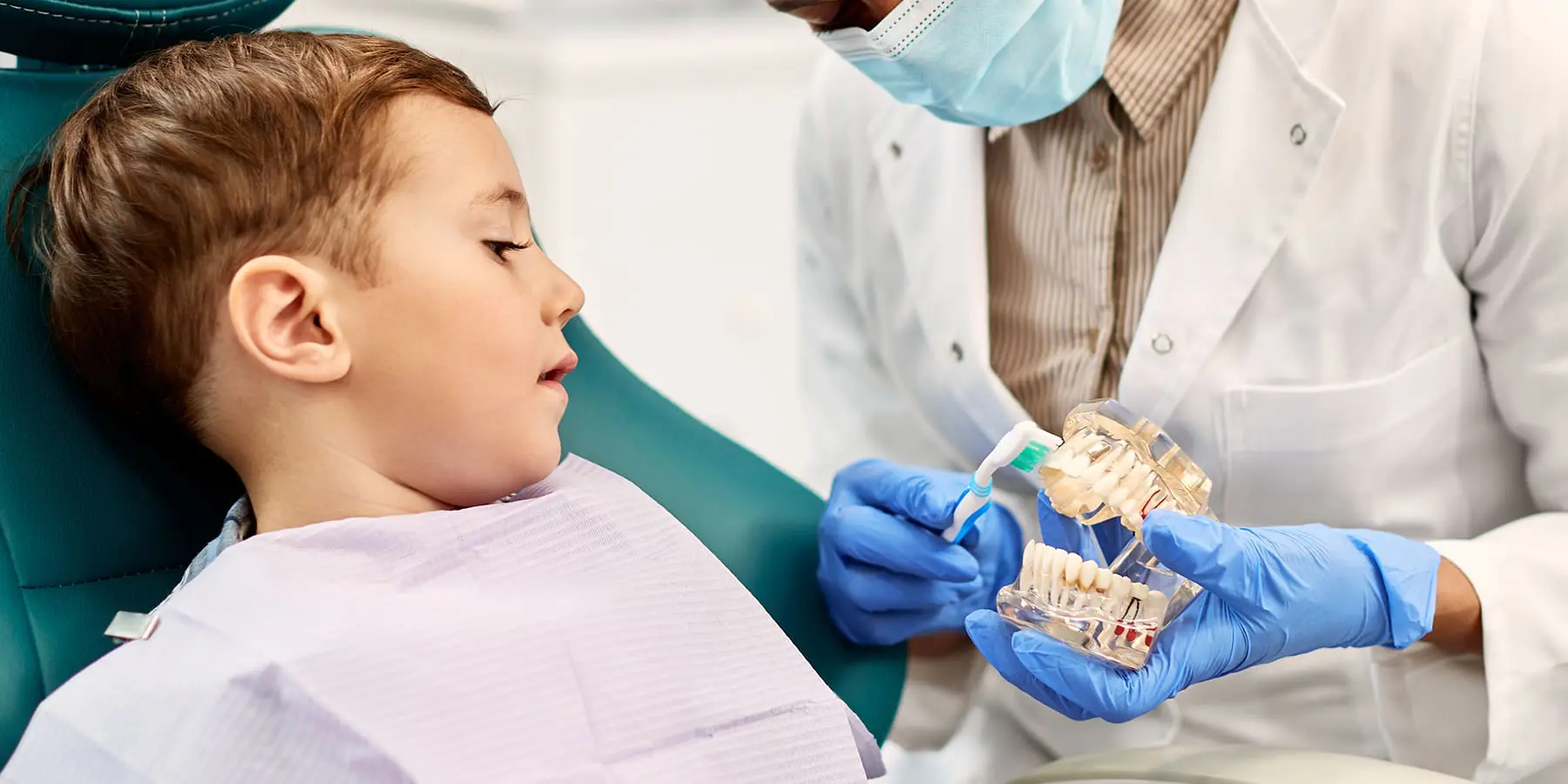
Pediatric Dentist Explains: Dentinogenesis Imperfecta in Kids
Reviewed by Dr. David Sentelle, DMD, PhD, MPH
Reading time: three minutes
Dentinogenesis imperfecta affects how teeth develop, often causing noticeable changes in color and strength. Many parents first recognize it when their child’s teeth look translucent or begin wearing down earlier than expected.
How Dentinogenesis Imperfecta Affects Teeth
Dentinogenesis imperfecta is a genetic condition that impacts the dentin, the inner layer that supports enamel. When dentin forms incorrectly, the outer enamel is more likely to chip, wear, or break.
Teeth may appear:
- Blue-grey or yellow-brown
- Translucent or opalescent
- More fragile than typical teeth
Both baby teeth and permanent teeth can be affected. Because the dentin is weaker, teeth may wear down or chip more easily.
Types of Dentinogenesis Imperfecta
This condition is grouped into three types based on how it presents and whether it is linked to other conditions.
- Type I: Occurs alongside osteogenesis imperfecta, a condition that affects bone development. Teeth are often discolored and fragile.
- Type II: The most common form. It affects only the teeth and typically leads to translucent teeth that wear down over time.
- Type III: A rare type where teeth may initially have very large pulp spaces and can break down quickly after eruption.
While the types vary, all forms involve weaker dentin and an increased risk of tooth wear.
Changes in Tooth Shape and Structure
In addition to color changes, dentinogenesis imperfecta alters how teeth form and function.
Dentists may notice:
- Bulbous crowns, where teeth appear rounded or wider near the gumline
- Short or narrow roots
- Enamel that separates easily from the underlying dentin
These structural differences explain why teeth may chip or flatten more quickly than expected.
How the Condition Is Diagnosed
Dentinogenesis imperfecta is usually identified after teeth begin to erupt. At Lonestar Kid’s Dentistry, we evaluate tooth color, shape, and wear patterns during routine exams as part of monitoring dental development.
Dental imaging helps confirm the diagnosis and assess how teeth are forming beneath the surface. Imaging may show:
- Reduced or absent pulp chambers
- Shortened roots
- Characteristic internal tooth changes
Early identification helps protect developing teeth, guide treatment decisions, and reduce the risk of avoidable wear or damage.
How Treatment Protects Developing Teeth
Treatment for dentinogenesis imperfecta focuses on protecting and strengthening teeth that are more prone to wear, chipping, or breakage. Because both baby teeth and permanent teeth can be affected, care often evolves as your child grows and new teeth erupt.
The goal is to reinforce weakened tooth structure, maintain normal function, and support long term oral health.
Common treatment options may include:
- Fillings or bonding
- Dental crowns
- Veneers
Regular monitoring allows treatment to be adjusted as baby teeth fall out and permanent teeth develop. Early protection helps reduce excessive wear and supports healthy dental development over time.
Monitoring Dental Development Over Time
Children with dentinogenesis imperfecta benefit from consistent monitoring as their teeth and jaws develop. Changes in wear, spacing, and eruption patterns can affect long-term outcomes.
At Lonestar Kid’s Dentistry, growth and development are evaluated during routine exams. Care is adjusted over time to help protect teeth and support healthy function as your child grows.
Pediatric Dentist in Prosper, TX
With early care and the right treatment approach, children with dentinogenesis imperfecta can maintain healthy, functional smiles.
To book an appointment at our pediatric dental office in Prosper, TX, call (469) 228-4402, request an appointment online, or visit us at 240 S. Preston Road, Suite 10 Prosper, TX 75078.
📍Other locations
Lonestar Kid’s Dentistry in Frisco, TX
Lonestar Kid’s Dentistry in McKinney, TX
FAQs
The condition commonly affects both primary and permanent teeth, though the severity can vary.
Changes in dentin structure alter how light passes through the tooth, creating a translucent or opalescent appearance.
Not always immediately, but regular monitoring is important. Many cases benefit from early protective treatment to prevent damage.