


Reviewed by Dr. Paul Rubin
Nitrous oxide, commonly known as laughing gas, can help children feel more relaxed and comfortable during dental visits. However, it isn’t the best option for every child or dental procedure. Choosing the right sedation option depends on several factors, with the goal of making dental treatment as safe and comfortable as possible.
We care for growing smiles in Frisco, McKinney, and Prosper, TX with gentle, kid-focused dental care.
Why Nitrous Oxide Isn’t Appropriate for Every Child
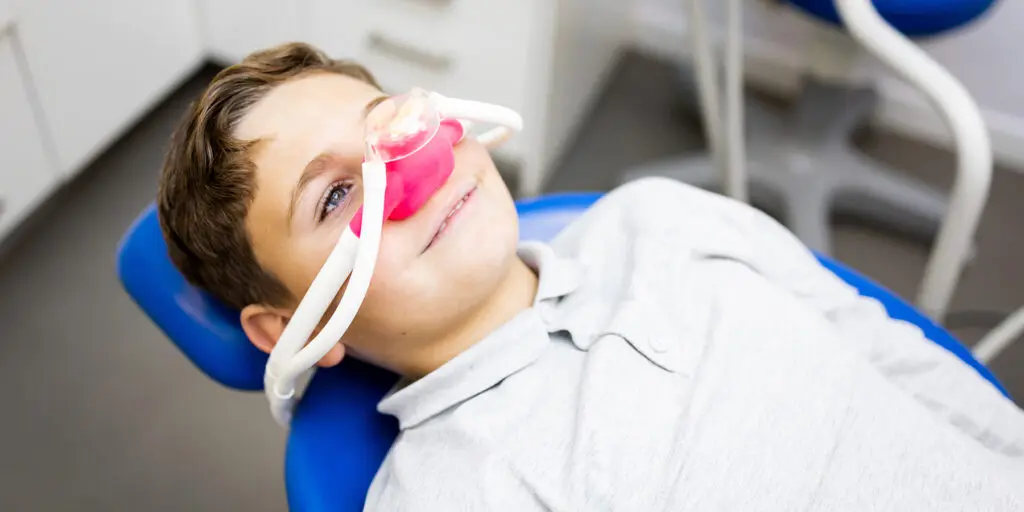
Nitrous oxide (laughing gas) is given through a small nose mask to help children relax while remaining awake. For it to work effectively, the child must be able to breathe comfortably through their nose.
Laughing gas may not be the best option for children who:
- Breathe through their mouths: They may not get enough laughing gas through the nose mask.
- Have a stuffy nose: Congestion or allergies can make it harder to breathe through the nose.
- Have severe dental anxiety: Children who are very scared or upset may have trouble using the mask.
- Have trouble cooperating: Some children may struggle to keep the mask on or sit still during treatment.
The type of procedure also needs to be considered. Laughing gas may be enough for a simple filling but not for longer or more involved dental treatments.
Why Choosing the Right Sedation Matters
Choosing the right sedation can help prevent a stressful dental experience. For example, laughing gas may not be enough for a child who is very anxious about having several cavities treated. If the child remains frightened or upset, it could lead to lasting dental anxiety and make future visits more difficult.
While parents may prefer laughing gas because it’s simpler and less expensive, it isn’t always the best choice. Another type of sedation may help the child remain calm and comfortable, reducing the chance of having to stop or reschedule treatment.
Three Types of Pediatric Dental Sedation
At Lonestar Kid’s Dentistry, we offer three types of pediatric dental sedation. Our pediatric dentists recommend the most appropriate option based on your child’s needs, comfort, and safety.
1. Nitrous Oxide (Minimal Sedation)
Nitrous oxide is often a good option for children that are comfortable at the dentist and can breathe comfortably through their nose.
Children remain awake and responsive during treatment. The effects typically wear off within minutes after the laughing gas is stopped.
2. Oral Conscious Sedation (Moderate Sedation)
Oral sedation may be recommended for children with moderate anxiety, previous difficult dental experiences, or trouble cooperating during treatment.
Medication is given before the procedure to help children relax and feel drowsy. They remain conscious but may remember little about their appointment.
Our pediatric dentists maintain special sedation permits, complete 12 hours of sedation training each year, and keep their Pediatric Advanced Life Support (PALS) certification current. These ongoing requirements are one reason not all dental practices offer oral sedation.
3. IV Sedation (Deep Sedation)
IV sedation may be recommended for children with severe dental anxiety, special healthcare needs, or extensive dental treatment.
For these appointments, a pediatric anesthesiologist comes to our office to administer sedation and monitor your child while our pediatric dentist performs the treatment.
A dedicated recovery nurse also helps care for your child afterward. This allows children to receive dental treatment in a familiar setting with specialized anesthesia care and monitoring.
How the Best Sedation Option Is Determined
When recommending sedation, we consider several aspects of the child’s health, behavior, and treatment needs rather than relying on one method for everyone.
Our evaluation includes:
- Age and development: Whether the child can understand instructions and cooperate during treatment.
- Medical history: Existing health conditions, medications, and other considerations that may affect sedation.
- Breathing ability: Whether the child can comfortably breathe through the nose when nitrous oxide is being considered.
- Dental anxiety: How the child responds to the dental environment and whether mild sedation is likely to be sufficient.
- Treatment complexity: The number of procedures, their duration, and the child’s ability to tolerate the planned care.
- Previous dental experiences: Whether the child has struggled with dental treatment or sedation in the past.
Our recommendations reflect the child’s overall needs and the level of sedation we believe will provide the safest and most comfortable experience.
FAQs
No. Sedation helps children relax, while local anesthesia numbs the treatment area to prevent pain.
No. A child who needs sedation for one procedure may not need it for future visits. Recommendations depend on the child’s comfort level, development, and treatment needs at each appointment.
A kids’ sedation dentist will consider your child’s age, anxiety level, medical history, and treatment needs before recommending the most appropriate sedation option.
Coverage varies by insurance plan, type of sedation, and reason it is recommended. Parents should check their benefits and ask the dental office about expected costs before scheduling treatment.
Your Child’s Comfort and Safety Come First
At Lonestar Kid’s Dentistry, our board-certified pediatric dentists take the time to evaluate each child’s needs and explain their recommendations. We believe children deserve an approach that prioritizes their safety, comfort, and long-term dental health.
To book an appointment at our pediatric dental office in Prosper, TX, call (469) 228-4402, or visit us at 240 S. Preston Road, Suite 10 Prosper, TX 75078.
📍Other locations