


Reviewed by Dr. Paul Rubin
Reading time: 4 minutes
Most parents deal with some resistance to tooth brushing at one point or another. Some children refuse outright, while others rush through it or want to do it on their own before they are ready. The good news is that brushing resistance is common, and there are practical ways to make brushing a more positive part of your child’s daily routine.
We care for growing smiles in Frisco, McKinney, and Prosper, TX with gentle, kid-focused dental care.
Why Do Some Kids Refuse to Brush Their Teeth?
Children avoid brushing for many different reasons.
Some common reasons include:
- They want more independence
- They dislike the taste or texture of toothpaste
- The toothbrush feels uncomfortable
- They do not understand why brushing is important
- They become distracted by play or other activities
- They have sensory sensitivities
Sometimes the reason changes as children grow, so what worked before may need to be adjusted.
Why Brushing Every Day Matters
Skipping brushing occasionally is unlikely to cause immediate problems, but regularly missing brushing allows plaque to build up on the teeth.
Over time, this can lead to:
- Cavities
- Gum irritation
- Bad breath
- White spots that are early signs of enamel damage
- More frequent dental treatment
Brushing twice a day with fluoride toothpaste helps remove plaque before it causes these problems.
How Parents Can Make Brushing Easier
Building healthy habits is often more effective than forcing brushing.
Make brushing part of the routine
Children respond well to predictable routines. Brushing at the same time each morning and evening helps make it an expected part of the day.
Allow your child to make small choices
Giving children some control can reduce resistance.
For example, let them choose:
- Their toothbrush color
- The flavor of toothpaste
- Which song to play while brushing
Brush together
Young children often copy what they see. Brushing your own teeth alongside your child helps demonstrate good habits and makes brushing feel like a family activity instead of a task.
Use positive encouragement
Praise effort instead of focusing on perfection. Simple encouragement, sticker charts, or celebrating consistent brushing can motivate many children without turning brushing into a power struggle.
How Long Should Parents Help Brush?
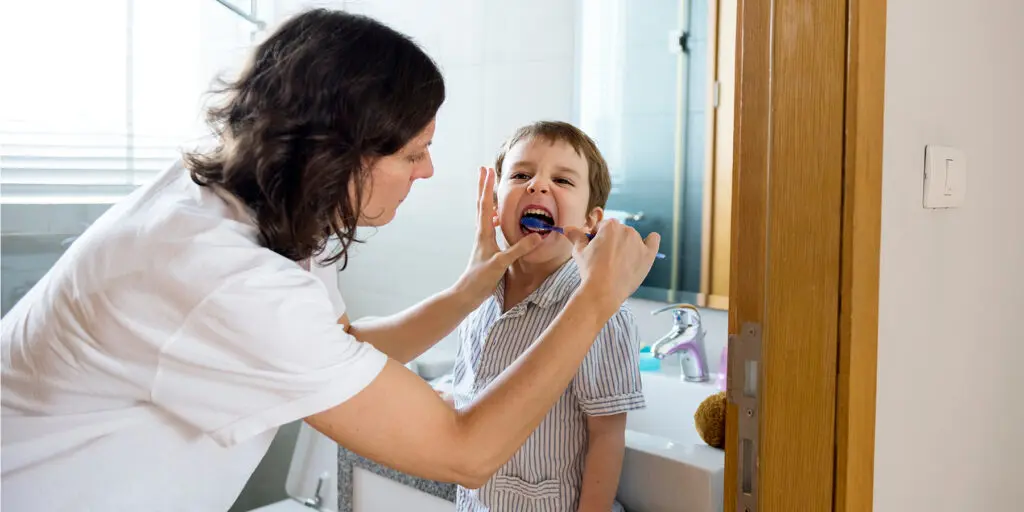
Many children do not have the hand coordination to brush effectively on their own, even if they want to. Parents should continue helping or supervising brushing until their child can consistently clean every surface of the teeth well. For many children, this is around ages 6 to 8, although some need help for longer.
A simple guideline is whether your child can button their buttons and zip their zippers. These skills require coordination similar to effective tooth brushing. It is always a good idea to supervise their brushing to make sure they are reaching every surface.
What If Your Child Still Refuses?
Some children continue resisting despite your best efforts.
If brushing becomes a daily struggle:
- Stay calm and consistent
- Avoid using brushing as a punishment
- Keep brushing sessions positive and brief
- Look for possible discomfort, such as sore gums or a loose tooth
- Ask your pediatric dentist for advice during your child’s next visit
Sometimes a small change in technique or routine makes a big difference.
Monitoring Your Child’s Oral Health
Even with a good routine at home, regular dental visits remain an important part of keeping your child’s smile healthy.
At Lonestar Kid’s Dentistry, we monitor oral health as children grow and work with families to build healthy brushing habits. During routine exams and professional teeth cleanings, we can demonstrate age-appropriate brushing techniques, answer questions, and recommend strategies that fit your child’s needs.
Pediatric Dentist in McKinney,TX
If brushing continues to be difficult or you have concerns about your child’s oral hygiene, a visit with your pediatric dentist can help identify challenges and provide personalized guidance.
To book an appointment at our pediatric dental office in McKinney, TX, call (214) 436-5555 or visit us at 5323 W University Dr #100, McKinney, Texas.
📍 Other locations
Lonestar Kid’s Dentistry in Frisco, TX
Lonestar Kid’s Dentistry in Prosper, TX
FAQs
Most children can begin brushing on their own around age 6, but they usually need supervision or assistance until they can brush effectively, often around ages 7 to 8.
Try identifying what is causing the resistance. The toothbrush, toothpaste flavor, or brushing technique may be uncomfortable. Keeping brushing calm and consistent often helps over time.
Brushing twice a day is recommended to remove plaque and reduce the risk of cavities. Skipping regular brushing allows bacteria and plaque to build up.
Playing music, using a timer, letting your child choose their toothbrush, or brushing together can make the routine more enjoyable.
It is important that brushing happens every day, but forcing it can sometimes increase resistance. A calm, consistent routine combined with positive encouragement is usually more effective for building long-term habits.